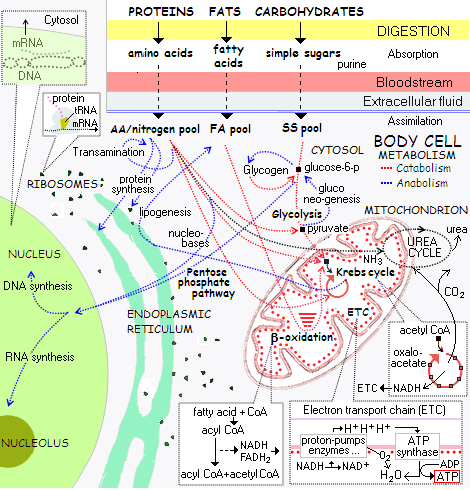
Métabolisme = ensemble des réactions chimiques ayant lieu dans une cellule, donc un organisme.
Présentation des cellules (Euglena normales ou mutées) et milieux de culture (organique et/ou minéral)
Conseils pour travailler en conditions stériles
Euglenoid party : http://www.youtube.com/watch?gl=FR&hl=fr&v=0rNI8Bos_BQ&feature=related
photographies d'euglènes :
http://www.microscopies.com/DOSSIERS/Galerie/PLANCHE-4/IMAGES/Euglene-F-Quinquet.jpg ;
http://37.img.v4.skyrock.com/37b/siocnarf/pics/599729223_small.jpg ;
http://svt.ac-rouen.fr/biologie/cidre/fermentation/image/multiplication.jpg ;
http://xxi.ac-reims.fr/svt-reims/page-a/activite2-2.htm
schémas à télécharger au format doc :
http://svt.ac-dijon.fr/schemassvt/article.php3?id_article=945
http://svt.ac-dijon.fr/schemassvt/article.php3?id_article=40
http://www.infovisual.info/02/001_fr.html
infos sur les euglènes :
http://www.ac-reims.fr/datice/svt/docpedagacad/lycee/sciencvie/cellule/algues/activite_3.htm ;
http://www.snv.jussieu.fr/vie/dossiers/culturedecellules/euglenes.htm ;
http://pedagogie.ac-toulouse.fr/svt/serveur/lycee/sanhard/euglene.html ;
http://pedagogie.ac-amiens.fr/svt/info/logiciels/Mesurim2/exemples/algues/algues.htm
comptage : http://www.didier-pol.net/3FERM-EXA.html#numlev
ou : http://www2.ac-lyon.fr/enseigne/biologie/enseig/seconde/euglene.html
comptage KOVA : http://www.didier-pol.net/3num.htm
la grille contient 1 µL, elle est divisée en 9 carrés de 9 cases chacun.
On considère que les barres de séparation entre les cases contiennent l'équivalent de 9 cases.
IL faut donc multiplier le nombre de cellules trouvées par case par 90 pour avoir le nombre de cellules par µL
pour aller plus loin : http://www.didier-pol.net/2dosglubl.htm
suivi fermentation : http://svt.ac-rouen.fr/biologie/cidre/fermentation/fermentation.htm
comptage Malassez: http://www.ac-versailles.fr/tpe/serie-s/yaourt/numeration_sur_lame.htm
http://www.viticulture-oenologie-formation.fr/vitioenoformlycee/champagnisation/comptagelevuresvivantesmalassez.htm
pb → hyp (réponse provisoire au pb posé) → conséquences (de l'hypothèse) vérifiables (par l'expérience) → protocole expérimental (schéma) → résultats → tableau commun :
|
Milieu |
Organique A |
Minéral B |
Organique A |
Minéral B |
|
Cellules / µL |
à la lumière, 25°C |
à l'obscurité, 25°C |
||
|
Euglène verte E1 |
1386+2160 +2580+498 +676+2655 |
486+540+810+122+255+ ? |
414+2250 +1950+540+855+ ? |
180+90+330+504+135+ ? |
|
Euglène blanche E2 |
450+990 +1200+1170+153+1668 |
18+0+0+0+0+0 |
306+270+774+135+144+? |
72+90+45+0+ 72+45 |
→ graphe (disque ; histogramme ; courbe ?) → interprétation (traduction d'outils mathématique en terme biologique) → conclusion (infirmer ou confirmer l'hyp → discussion /auto ou hétérotrophie → ouverture = nouvelle question que pose la discussion)
utiliser 4 FT : rédiger un CR, schématiser une expérience, réaliser un graphe, interpréter un graphe.
correc CR TP euglènes
impact lumière => rôle de la photosynthèse => autotrophie
mat organique inutile pour autotrophes (tube E1B // E2B) si lumière+minéraux (E1B à obscurité)
mt organique indispensable pour hétérotrophes [autre ; nourriture] (E2A // B)
+=> rôle du patrimoine génétique (euglènes mutées) / métabolisme
notions d'échelle : http://44.svt.free.fr/jpg/organisation_vivant.htm
1 mm = 1 000 µm = 1 000 000 nm : http://www.cellsalive.com/howbig.htm
eucaryote, procaryote
organites cellulaires : mitochondries, chloroplastes, … :
http://www.healthvalue.net/files/mitochondrie.gif, http://fr.wikipedia.org/wiki/Image:Plast.JPG
cellule végétale, animale : http://www.cellsalive.com/cells/cell_model.htm
cells alive web site : http://www.cellsalive.com/aboutus.htm
Autotrophe [seul ; se nourrir]
Hétérotrophe [de l'autre ; se nourrir]
Paramecium 50 à 300 µm : eucaryote hétérotrophe unicellulaire
http://youtu.be/RloRJnj74EM ; http://youtu.be/AglfOAwFRhI ; http://youtu.be/fh_yjLppNAg ; http://membres.multimania.fr/nabiga/animaux/ciliophores.html
Euglena 30 à 300 µm : eucaryote autotrophe unicellulaire
http://www.microscopies.com/DOSSIERS/Galerie/PLANCHE-4/IMAGES/Euglene-F-Quinquet.jpg ; http://www.ecosociosystemes.fr/euglene.jpg
http://youtu.be/0rNI8Bos_BQ ; http://youtu.be/fI7nEWUjk3A
Saccharomyces 10 à 50 µm : eucaryote hétérotrophe unicellulaire
http://www.ecosociosystemes.fr/levure.jpg ; http://www.magma.ca/~scimat/yeast.htm ; http://www.visualphotos.com/photo/1x6040893/coloured_tem_of_yeast_saccharomyces_cerevisiae_b250806.jpg
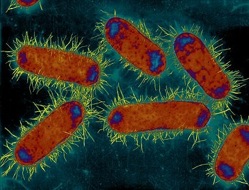
Escherichia : 1 µm : procaryote hétérotrophe unicellulaire
http://www.lookfordiagnosis.com/mesh_info.php?term=Escherichia&lang=4# ; http://www.steripen.com/stuff/contentmgr/files/1/585e36766c6cef0fbe177c71e6b311e8/misc/ecoli.jpg ; http://www.pharmacie-centrale.com/wp-content/uploads/2010/08/escherichia.jpg
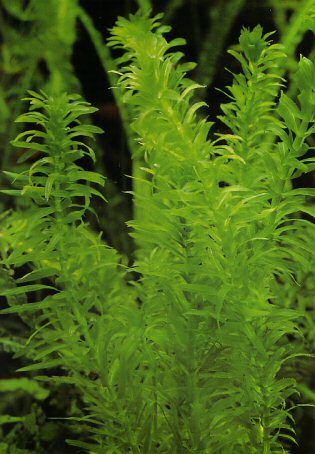
Elodea 10 cm env : eucaryote autotrophe pluricellulaire
http://i12.servimg.com/u/f12/09/00/21/25/elodee10.jpg
http://membres.lycos.fr/jjcord/mare/images/elod%E9e.jpg
http://histoiresnaturelles.net/vegetaux/microscopie/elodee4.jpg
http://www.snv.jussieu.fr/bmedia/gaz/elodee.htm
http://svt.ac-dijon.fr/schemassvt/rubrique.php3?id_rubrique=13
videothèque CNRS : http://videotheque.cnrs.fr/index.php?urlaction=doc&id_doc=1763
=> Mutant, organelle, orders in size (cell, organelle, membrane). prokaryote / eukaryote. Auto/Hétérotrophe
Mutant, organite, ordres de grandeur de tailles (cellule, organite, membrane), Pro /Eucaryote, Auto/Hétérotrophe
Many chemical changes occur within the cell : it is called the metabolism. It is controlled by environmental conditions and by genetic heritage. The cell is a space bounded by a membrane that exchanges matter and energy with its environment. This structural and functional unit common to all living beings is an indication of their parentage.
De nombreuses transformations chimiques se déroulent à l’intérieur de la cellule : elles constituent le métabolisme. Il est contrôlé par les conditions du milieu et par le patrimoine génétique. La cellule est un espace limité par une membrane qui échange de la matière et de l’énergie avec son environnement. Cette unité structurale et fonctionnelle commune à tous les êtres vivants est un indice de leur parenté.
Schéma-bilan 3+4©
schéma du métabolisme cellulaire : http://www.accessexcellence.org/RC/VL/GG/ecb/ecb_images/13_02_cell_metabolism.jpg ; http://www.exrx.net/Images/Biochemical/Simplified.gif ; http://www.healthknot.com/image-files/cell_metabolism.png
Conseil national de recherche Canada : http://www.nrc-cnrc.gc.ca/fra/education/biologie/galerie/index.html
Site Bmédia : http://www.edu.upmc.fr/biomedia/rubrique_2/banque_images/histologie/index.html
Serimedis : http://www.serimedis.inserm.fr/index.pgi
CNRS / Les sciences de la vie au lycée : http://www.cnrs.fr/cnrs-images/sciencesdelavieaulycee/cellule/intro.htm ; http://www.cnrs.fr/cnrs-images/sciencesdelavieaulycee/index.htm
CNRS / Sagascience http://www.cnrs.fr/cw/dossiers/doscel/accueil2.htm
Institut européen de chimie et de biologie : http://www.cellbiol.net/cbe/multimedia.php
CERIMES : http://www.cerimes.fr/e_doc/cellule/index_flash.htm#%20
Virtual cell : http://www.life.illinois.edu/plantbio/cell/
Cell alive : http://www.cellsalive.com/
Web atlas : http://www.itg.uiuc.edu/technology/atlas/
Site de microscopie de NIKON : http://www.microscopyu.com/articles/livecellimaging/index.html
Inside the cell : http://publications.nigms.nih.gov/insidethecell/
Marius explore la cellule : http://www.bioclips.com/
Voyage inside the cell : http://www.sinauer.com/voyage/video.php
La cellule sur canal U : http://www.canal-u.tv/producteurs/science_en_cours/dossier_programmes/
la_cellule_vivante/pour_l_enseignement/la_cellule_2002 : http://www.canal-u.tv/producteurs/science_en_cours/dossier_programmes/la_cellule_vivante/du_cote_de_la_recherche/cellules_en_vues
Biointeractive : http://www.hhmi.org/biointeractive/vlabs/index.html
Puissances de 10: http://www.dailymotion.com/video/x2zuqa_puissances-de-dix-powers-of-ten_shortfilms


/https%3A%2F%2Fassets.over-blog.com%2Ft%2Fcedistic%2Fcamera.png)