http://www.nature.com/news/2007/070423/full/070423-1.html / Published online: 23 April 2007; | doi:10.1038/news070423-1
Ancient fossil forest found by accident
Treasure trove of extinct species discovered in old coal mine.Katharine Sanderson
Geologists
have found the remains of a huge underground rainforest hidden in a
coal mine in Illinois. The fossil forest, buried by an earthquake 300
million years ago, contains giant versions of several plant types alive
today.
Experts
say the forest was growing on top of peaty soil when an ancient tremor
plunged it about 5 metres down, allowing it to be buried and fossilized
beneath further layers of more recent rock. It dates from a time when
North America and Europe were joined together, at the Equator - similar
forests went on to be transformed into the rich coal seams of the two
continents.
The
forest was discovered in 2005 by John Nelson of the Illinois State
Geological Survey, who was making routine measurements in a mine in
Vermilion County. He called in a team of palaeontologists to
investigate the forest.
As they drove down to 100 metres below ground, they saw the forest's
remains in the glare from their miners' lamps as they looked up at the
ceiling. "You actually see roots coming down; you see tree trunks lying
in the ceiling," says Howard Falcon-Lang of the University of Bristol,
UK, a member of the research team.
The
forest is not the oldest to be discovered - others are known that are
up to 370 million years old - it is the sheer size of the forest that
is significant. It has allowed Falcon-Lang and his colleagues to show
that the distribution of plant species that made up the forests in the
Carboniferous era differed from region to region, rather than being
randomly mixed.
"Forests
closer to the coast differed from forests slightly further inland,"
says Falcon-Lang. "It is a subtle point but one that could not have
been made without the great size of the sampled area," says Kirk
Johnson, chief curator at the Denver Museum of Nature and Science,
Colorado. "Without a large area to sample, there was really no way to
know."
The
ancient forest bears little resemblance to modern equivalents. "The
diversity of the first rainforests was bizarre," says Falcon-Lang. He
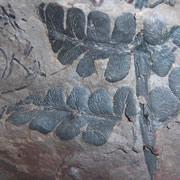
and his team found the remains of tree-sized clubmosses, horsetails and
ferns - plants that today grow 2 or 3 metres tall, but in the ancient
forest reached heights of up to 40 metres. Also surprising is the
presence of remains from mangrove-like plants. "It was always assumed
that mangrove plants had evolved fairly recently," says Falcon-Lang.
The
forest probably had about 50 different plant species, although
Falcon-Lang says that this is a conservative estimate. We probably
lumped several similar species together as one," he explains. Modern
rainforests are more diverse, containing as many as 500 plant species
per hectare.
This discovery also shows that the fundamental processes
that guide the complexity and evolution of forests has been around for
hundreds of millions of years, says Scott Hocknull, a curator at the
Queensland Museum in Brisbane, Australia. "Knowing this and how it has
played out so many times in history will allow ecologists to better
understand the complexity of modern forest systems," he adds.
The
forest's long life will now be cut short - the mine is likely to
collapse in the next few years and there are no plans to preserve it
for the sake of the fossils. But Falcon-Lang is philosophical about
losing the forest, pointing out that if it weren't for mining, the
forest would never have been discovered in the first place.
References : DiMichele W. A.,
et al. Geology, 35. 415 - 418 (2007).




/https%3A%2F%2Fassets.over-blog.com%2Ft%2Fcedistic%2Fcamera.png)